Lab-Grown Diamonds in Hatton Garden, London
Explore Lab-Grown Diamonds at The Ice Club
For clients exploring lab-grown diamonds in Hatton Garden, London, understanding how these stones are produced, graded and used in jewellery can help make the selection process easier.
At The Ice Club, we welcome enquiries from people interested in diamonds, engagement rings and bespoke jewellery. Whether you are comparing diamond options for a special occasion or considering a particular design, understanding the characteristics of lab-grown diamonds is a useful starting point.
What Are Lab-Grown Diamonds?
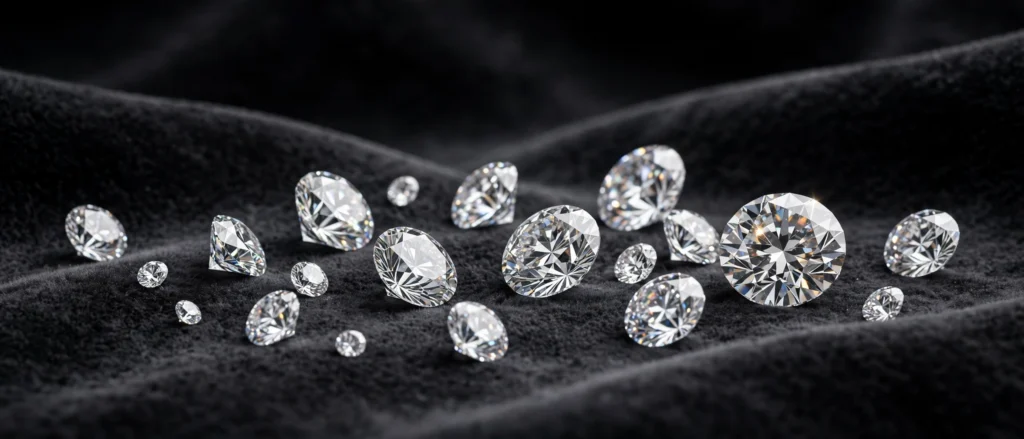
Lab-grown diamonds are genuine diamonds produced in controlled laboratory environments rather than formed naturally beneath the Earth’s surface.
They are made using specialised processes that allow carbon atoms to develop into a crystalline diamond structure. The resulting stones share the essential physical, chemical and optical properties of natural diamonds.
Lab-grown diamonds are not the same as diamond simulants. Materials such as cubic zirconia and moissanite may resemble diamonds visually, but they have different compositions and properties.
Some important characteristics of lab-grown diamonds include:
- Genuine diamond composition: Made from crystallised carbon, like natural diamonds.
- Similar physical properties: They have the same hardness and fundamental crystal structure as natural diamonds.
- Different origin: Produced through controlled technological processes.
- Variety of shapes: Available in popular shapes such as Round, Oval, Emerald, Princess and Cushion.
- Jewellery versatility: Suitable for different types of diamond jewellery, including rings, earrings and necklaces.
How Are Lab-Grown Diamonds Created?
Modern diamond-growing technology makes it possible to produce diamonds under carefully controlled conditions. Two principal methods are used: High Pressure High Temperature (HPHT) and Chemical Vapour Deposition (CVD).
High Pressure High Temperature (HPHT)
The HPHT process recreates some of the conditions associated with natural diamond formation.
A small diamond seed is placed in a specialised growth chamber alongside a carbon source. High pressure and elevated temperatures encourage carbon atoms to crystallise around the seed, gradually forming a larger diamond.
The process requires specialised equipment and carefully controlled conditions.
Chemical Vapour Deposition (CVD)
CVD uses a different approach to diamond growth. A thin diamond seed is placed inside a chamber containing carbon-rich gases.
Energy is introduced into the chamber to create a plasma, allowing carbon atoms to separate from the gases and gradually deposit onto the seed. Over time, these layers develop into a diamond crystal.
Both methods can produce genuine diamonds, although the growth characteristics and identifying features can differ.

Lab-Grown Diamond Jewellery in Hatton Garden
Lab-grown diamonds can be incorporated into many jewellery designs. Their availability in different shapes, sizes and qualities provides a range of options when considering a particular piece.
Lab-Grown Diamond Engagement Rings
An engagement ring is a personal choice, and the diamond plays a central role in its overall appearance.
Lab-grown diamonds can be considered in a variety of engagement ring styles, including solitaire, halo and more detailed settings. Popular shapes include Round Brilliant, Oval, Emerald and Princess.
The proportions of the diamond and the design of the setting help determine the finished appearance.
Explore our Diamond Engagement Rings collection.
Lab-Grown Diamond Rings
From simple designs to more distinctive statement pieces, lab-grown diamonds can be used in different ring styles.
A single centre stone can create a clean appearance, while additional diamonds can introduce detail and dimension to the design.
Discover our Diamond Rings collection.
Lab-Grown Diamond Earrings
Diamond earrings offer a versatile jewellery option for different occasions. Stud designs provide a classic appearance, while more elaborate arrangements can create a distinctive finish.
The choice of diamond shape, size and setting influences the overall style.
Explore our Diamond Jewellery collection.
Lab-Grown Diamond Necklaces
A lab-grown diamond can form the centrepiece of a pendant or be incorporated into a more detailed necklace design.
From minimal jewellery to designs featuring multiple stones, the right arrangement depends on personal preference and the intended look.
Discover our Diamond Necklaces collection.
Bespoke Diamond Jewellery
For clients considering a more individual design, lab-grown diamonds may also be explored as part of a bespoke jewellery project.
The choice of diamond, setting, metal and proportions can all influence the final piece. Thinking about these details in advance can help establish a clear direction for a design.
Understanding Lab-Grown Diamond Quality
Although lab-grown diamonds have a different origin from natural diamonds, their quality is assessed using familiar diamond characteristics.
The 4Cs – Cut, Colour, Clarity and Carat Weight – provide a useful framework for comparing individual stones.
Cut: How the Diamond Reflects Light
Cut quality influences the way a diamond interacts with light. Proportions, symmetry and polish all contribute to its brilliance and overall appearance.
A well-cut diamond can display attractive sparkle, regardless of whether it was grown in a laboratory or formed naturally.
Colour: Understanding Diamond Colour Grades
Colour grading for standard colourless-to-light-coloured diamonds generally follows the D-to-Z scale.
- D, E and F: Colourless.
- G, H, I and J: Near colourless.
- K to M: Faint colour.
- N to Z: Very light to light colour.
The choice of colour grade depends on the appearance you prefer and the setting in which the diamond will be used.
Clarity: Looking at Internal Characteristics
Clarity describes the internal inclusions and external blemishes present in a diamond.
Lab-grown diamonds can also contain growth-related characteristics. These are examined during grading, helping buyers understand the clarity of an individual stone.
Carat: Understanding Diamond Weight
Carat measures the weight of a diamond, with one carat equal to 200 milligrams.
The visible size of a diamond also depends on its shape, measurements and proportions. For this reason, comparing dimensions alongside carat weight can provide a better understanding of its appearance.
Lab-Grown Diamonds vs Natural Diamonds
One of the most common questions when exploring diamond jewellery is how lab-grown diamonds compare with natural diamonds.
Both are genuine diamonds and share the same essential chemical composition and crystal structure. However, their origins, formation processes and market characteristics differ.
| Feature | Lab-Grown Diamonds | Natural Diamonds |
|---|---|---|
| Origin | Created in laboratory environments | Formed naturally within the Earth |
| Formation | HPHT or CVD technology | Geological processes |
| Composition | Crystalline carbon | Crystalline carbon |
| Hardness | 10 on the Mohs scale | 10 on the Mohs scale |
| Appearance | Available in different shapes and qualities | Available in different shapes and qualities |
| Identification | May require specialised gemmological testing | May require specialised gemmological testing |
| Grading | Can be independently graded | Can be independently graded |
The right option depends on what matters most to you. Some buyers prefer the geological origin of natural diamonds, while others are interested in the technological process behind laboratory-grown stones.
It is also worth considering that the two categories have different market pricing and resale characteristics. Neither should be selected on the basis of appearance alone.
Lab-Grown Diamond Certification: What Should You Check?
An independent grading report can provide useful information when comparing lab-grown diamonds.
Established gemmological laboratories, including GIA and IGI, assess diamonds and provide grading information according to their respective reporting standards.
Before choosing a lab-grown diamond, consider reviewing:
- Diamond identification: Confirmation that the stone is laboratory-grown.
- Growth method: Whether the diamond was produced using HPHT or CVD, where reported.
- Carat weight: The measured weight of the diamond.
- Colour grade: Its position on the relevant colour scale.
- Clarity grade: The presence and characteristics of inclusions and blemishes.
- Cut and finish: Information about proportions, polish and symmetry where available.
- Report number: A reference that can be used to check the grading report with the issuing laboratory.
A grading report provides information about a diamond’s characteristics. It should not be confused with an insurance valuation or a guarantee of future resale value.
What to Consider Before Choosing a Lab-Grown Diamond in Hatton Garden
If you are comparing lab-grown diamonds in Hatton Garden, it is worth taking time to understand the differences between individual stones.
1. Choose the shape you prefer
Start with the appearance you want. Round, Oval, Emerald, Princess and Cushion are among the recognised diamond shapes, each offering a different visual style.
2. Compare the 4Cs
Consider cut, colour, clarity and carat weight together rather than focusing on one characteristic alone.
3. Review the grading report
Check the available grading information and make sure the report corresponds to the diamond being considered.
4. Think about the finished jewellery
A diamond intended for an engagement ring may require different design considerations from one selected for earrings or a pendant.
5. Understand pricing and resale considerations
Lab-grown diamonds generally have different market pricing from natural diamonds. Their resale market can also differ, so consider the intended purpose of your purchase rather than assuming the original retail price will be recovered later.
6. Consider the setting and metal
The setting, metal colour and overall proportions can influence how a diamond looks once incorporated into jewellery.
Discover Diamond Jewellery at The Ice Club
Choosing a diamond is a personal decision. Understanding how different stones are created and assessed gives you a stronger foundation when exploring your options.
The Ice Club invites clients interested in diamonds and fine jewellery to explore its collections and discuss their preferences.
Whether you are considering an engagement ring, a pair of diamond earrings or a bespoke jewellery design, exploring the available styles can help you identify the right direction.
Explore more of our collections:

Diamond Engagement Rings
Find inspiration for a meaningful occasion.
Diamond Cuts
Learn about different diamond shapes and cutting styles, from round brilliant and oval to emerald, princess and cushion.
Certified Loose Diamonds
Learn more about our certified loose diamond offering.
Explore Lab-Grown Diamonds with The Ice Club
From classic Round Brilliant stones to distinctive Emerald and Oval shapes, lab-grown diamonds offer another way to explore diamond jewellery.
If you are considering lab-grown diamonds in Hatton Garden, London, The Ice Club invites you to discover its jewellery collections and get in touch to discuss your requirements.
Explore the possibilities, compare diamond characteristics and find a style that reflects your preferences.
Frequently Asked Questions About Lab-Grown Diamonds
1. Are lab-grown diamonds real diamonds?
Yes. Lab-grown diamonds are genuine diamonds made from crystallised carbon. They have essentially the same chemical composition, crystal structure and fundamental physical properties as natural diamonds.
2. Where can I explore lab-grown diamonds in Hatton Garden?
Hatton Garden is an established jewellery district in London. The Ice Club welcomes enquiries from clients interested in exploring its diamond and fine jewellery collections.
3. How are lab-grown diamonds made?
Lab-grown diamonds are primarily produced through two methods: High Pressure High Temperature (HPHT) and Chemical Vapour Deposition (CVD). Both use specialised technology to grow diamond crystals in controlled environments.
4. Can you tell the difference between natural and lab-grown diamonds by looking at them?
Generally, no. They can look identical to the unaided eye. Specialised gemmological equipment and testing may be required to identify their origin.
5. Are lab-grown diamonds as hard as natural diamonds?
Yes. Both score 10 on the Mohs scale of mineral hardness. However, hardness does not mean a diamond is impossible to chip or damage.
6. Do lab-grown diamonds come with certificates?
Lab-grown diamonds can be independently graded by recognised gemmological laboratories. The available report will depend on the individual stone and the laboratory’s reporting services.
7. Are lab-grown diamonds more affordable than natural diamonds?
Lab-grown diamonds generally have lower retail prices than comparable natural diamonds. Actual prices depend on the individual stone’s characteristics, specifications and market conditions.
8. Do lab-grown diamonds lose their sparkle over time?
A lab-grown diamond has the same fundamental optical properties as a natural diamond. Its sparkle does not simply disappear with time, although dirt, oils and residue can reduce its visible brilliance until the stone is cleaned.
9. Can lab-grown diamonds be used in engagement rings?
Yes. Lab-grown diamonds can be incorporated into solitaire, halo, three-stone and other engagement ring designs. The final choice depends on the desired appearance and setting.
10. Are lab-grown diamonds a good choice for bespoke jewellery?
They can be an option for clients considering a particular diamond shape, size or jewellery design. The suitability depends on individual preferences and the specifications of the stone.