Natural Diamonds in Hatton Garden, London
Discover the Beauty of Natural Diamonds at The Ice Club
For those exploring natural diamonds in Hatton Garden, London, choosing the right stone involves more than its appearance. Understanding diamond quality, colour, clarity, carat weight and certification can help you find a diamond that suits your preferences and jewellery requirements.
At The Ice Club, we welcome enquiries from clients interested in fine diamonds, diamond engagement rings and bespoke jewellery. Whether you are considering a natural diamond for a special occasion or exploring options for a personal jewellery design, our collection pages offer a starting point for discovering different styles.
What Are Natural Diamonds?
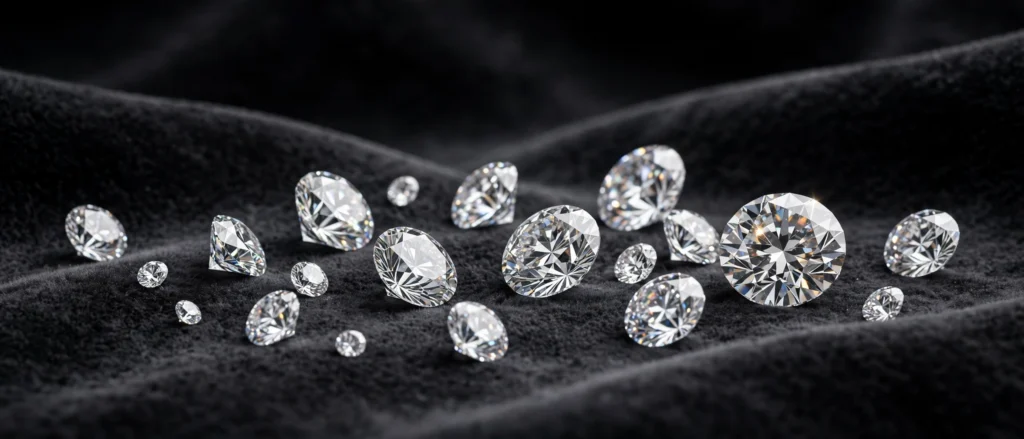
Natural diamonds are gemstones formed naturally beneath the Earth’s surface, generally at depths where extreme temperatures and pressures allow carbon atoms to crystallise into a diamond structure.
Over geological timescales, natural processes bring some of these diamonds closer to the Earth’s surface. They are eventually recovered through mining and other extraction methods.
Each natural diamond develops under its own geological conditions. Natural variations in colour, clarity and internal characteristics mean that no two stones are exactly alike.
Natural diamonds are valued for several reasons:
- Natural origin: Formed through geological processes over extremely long periods.
- Individual characteristics: Each stone has its own combination of colour, clarity and inclusions.
- Exceptional hardness: Diamond ranks 10 on the Mohs scale of mineral hardness.
- Versatile appearance: Available in different shapes, sizes and colour grades.
- Jewellery appeal: Used in engagement rings, earrings, necklaces, bracelets and other fine jewellery.

Natural Diamonds for Fine Jewellery in Hatton Garden
Hatton Garden has a long-established connection with London’s jewellery and diamond trade. It is an important destination for people researching fine jewellery, comparing diamond options and exploring different designs.
Natural diamonds remain a popular choice for a variety of jewellery styles, from understated everyday pieces to elaborate designs for significant occasions.
Natural Diamond Engagement Rings
A natural diamond engagement ring combines the character of a naturally formed gemstone with a design intended to mark an important occasion.
Round Brilliant, Oval, Princess, Emerald and Cushion shapes each create a different appearance. The choice of setting, metal and diamond proportions also influences the finished ring.
Explore our Diamond Engagement Rings collection.
Natural Diamond Rings
Natural diamonds can be incorporated into many ring styles, including solitaire designs, halo settings and rings featuring multiple stones.
The right design depends on your preferred appearance, how you intend to wear the ring and the characteristics of the diamond.
Explore our Diamond Rings collection.
Natural Diamond Earrings
Diamond earrings offer versatility, making them suitable for both everyday styling and special occasions.
From classic stud styles to more detailed designs, natural diamonds can create different looks depending on their shape, setting and arrangement.
Discover our Diamond Jewellery collection.
Natural Diamond Necklaces
Natural diamonds are also appreciated in necklaces and pendants. A single diamond can create a simple, understated look, while multiple stones can form more elaborate jewellery designs.
Explore our Diamond Necklaces collection.
Bespoke Natural Diamond Jewellery
For clients with a particular design in mind, a natural diamond can be considered as part of a bespoke jewellery project.
The choice of stone, setting and overall proportions all contribute to the final design. Exploring different diamond characteristics before making a decision can help establish the look you want to achieve.
Understanding Natural Diamond Quality: The 4Cs
When comparing natural diamonds in Hatton Garden, the 4Cs provide a recognised framework for understanding their quality. These four characteristics are Cut, Colour, Clarity and Carat Weight.
1. Diamond Cut
Cut describes how effectively a diamond’s proportions, symmetry and polish allow it to interact with light.
A well-cut diamond can display attractive brilliance, fire and sparkle. The quality of the cut can make a noticeable difference to the overall appearance of a stone.
Round Brilliant diamonds have established cut grading systems, while fancy shapes such as Oval, Pear and Emerald are assessed differently depending on the grading laboratory.
2. Diamond Colour
Natural diamonds are available in a range of colours. The standard D-to-Z grading scale assesses the degree of colourlessness in diamonds.
- D, E and F: Colourless.
- G, H, I and J: Near colourless.
- K to M: Faint colour.
- N to Z: Very light to light colour.
The choice of colour grade depends on personal preference, the jewellery setting and your budget.
Natural fancy-colour diamonds, such as yellow, pink and blue diamonds, are assessed using a separate colour-grading approach.
3. Diamond Clarity
Clarity refers to the natural characteristics found within a diamond, known as inclusions, and surface features known as blemishes.
Natural diamonds can contain tiny internal features formed during their geological development. These characteristics are assessed under magnification.
The commonly recognised clarity grades include:
- FL – Flawless
- IF – Internally Flawless
- VVS1 and VVS2 – Very, Very Slightly Included
- VS1 and VS2 – Very Slightly Included
- SI1 and SI2 – Slightly Included
- I1, I2 and I3 – Included
Clarity is one of the factors to consider when comparing diamonds, alongside their appearance and overall quality.
4. Diamond Carat Weight
Carat measures the weight of a diamond rather than its physical dimensions.
One carat equals 200 milligrams. A higher carat weight generally means a heavier diamond, but it does not automatically mean the stone will appear proportionally larger.
Its visible size also depends on its shape, depth and cutting proportions.
Natural Diamonds vs Lab-Grown Diamonds
One important decision when exploring diamonds is whether to choose a natural diamond or a lab-grown diamond.
Both are real diamonds and share the same essential chemical composition and crystal structure. Their main difference is how they are formed.
| Feature | Natural Diamonds | Lab-Grown Diamonds |
|---|---|---|
| Origin | Formed naturally within the Earth | Created in controlled laboratory environments |
| Formation | Geological processes over billions of years | Produced using specialised diamond-growing technology |
| Composition | Crystalline carbon | Crystalline carbon |
| Hardness | 10 on the Mohs scale | 10 on the Mohs scale |
| Appearance | Available in various shapes and qualities | Available in various shapes and qualities |
| Identification | May require specialised gemmological testing | May require specialised gemmological testing |
Neither option is automatically the right choice for everyone. Your decision may depend on your preference for natural origin, budget, intended jewellery design and the characteristics of the individual diamond.
If you are considering both options, explore our upcoming Lab-Grown Diamonds collection for further information.
Why Is Diamond Certification Important?
An independent diamond grading report provides information about a stone’s characteristics and helps buyers understand what they are considering.
When exploring natural diamonds, a grading report may include details such as:
- Diamond weight and measurements.
- Shape and cutting style.
- Colour grade.
- Clarity grade.
- Cut grade, where applicable.
- Polish and symmetry.
- Fluorescence.
- Report number and identifying details.
Recognised gemmological laboratories include the Gemological Institute of America (GIA) and the International Gemological Institute (IGI).
It is important to understand that a grading report describes a diamond’s characteristics. It is not the same as an insurance valuation or a guarantee of future resale value.
How to Choose the Right Natural Diamond
Selecting a natural diamond involves balancing appearance, quality and personal priorities. Before making a decision, consider the following points.
Start with your preferred diamond shape
Think about whether you prefer the brilliance of a Round Brilliant, the elongated appearance of an Oval or the structured design of an Emerald Cut.
Compare the 4Cs
Look beyond carat weight alone. Cut, colour and clarity all contribute to the overall appearance and quality of a diamond.
Review the grading report
Where an independent grading report is available, check that its details correspond to the diamond being considered.
Consider the jewellery setting
A diamond should complement its intended setting. Different shapes may require different setting styles to achieve the desired appearance and provide appropriate protection.
Establish your budget
Having a clear budget can help narrow your options and identify which diamond characteristics matter most to you.
Exploring Natural Diamonds in Hatton Garden, London
Hatton Garden is closely associated with London’s jewellery industry, making it a recognised location for people interested in diamonds and fine jewellery.
When exploring natural diamonds in the area, it is worth looking beyond the initial appearance of a stone. Understanding its grading information, proportions and intended use can help you make a more informed choice.
At The Ice Club, we invite you to explore our diamond and jewellery collections and contact our team to discuss your requirements.
Whether you are researching a natural diamond for an engagement ring, considering a loose certified stone or exploring a bespoke jewellery idea, the right starting point is understanding what matters most to you.
Explore More Diamond Collections
Finding the right diamond can be the beginning of something special. Whether you are interested in an individual loose stone, a diamond engagement ring or a distinctive jewellery design, exploring the available options is an important part of the process.
The Ice Club brings its jewellery offering to Hatton Garden, giving clients a place to explore different styles of fine and diamond jewellery.
Discover more from our collections:

Diamond Cuts
Learn about different diamond shapes and cutting styles, from round brilliant and oval to emerald, princess and cushion.
Certified Loose Diamonds
Learn more about our certified loose diamond offering.
Discover Natural Diamonds with The Ice Club
A natural diamond carries a unique geological history and offers a distinctive combination of beauty, durability and individual character.
If you are exploring natural diamonds in Hatton Garden, London, The Ice Club invites you to discover its diamond collections and discuss your jewellery preferences.
Whether you are considering an engagement ring, a certified loose diamond or a bespoke jewellery design, take the time to explore the possibilities.
Explore Fine Diamonds at The Ice Club
Frequently Asked Questions About Natural Diamonds
1. What is a natural diamond?
A natural diamond is a gemstone formed beneath the Earth’s surface through geological processes involving intense heat and pressure over billions of years. It consists of crystallised carbon and is valued for its durability and optical properties.
2. Are natural diamonds real diamonds?
Yes. Natural diamonds are genuine gemstones made of crystalline carbon. Their naturally occurring formation distinguishes them from lab-grown diamonds, which are created using specialised technology.
3. Where can I explore natural diamonds in Hatton Garden?
Hatton Garden in London is an established jewellery district associated with diamond and fine jewellery businesses. The Ice Club welcomes enquiries from clients exploring its diamond and jewellery collections.
4. What makes natural diamonds different from lab-grown diamonds?
The main difference is their origin. Natural diamonds form through geological processes within the Earth, whereas lab-grown diamonds are produced in controlled laboratory environments. Both have essentially the same chemical composition and crystal structure.
5. How can I check the quality of a natural diamond?
The 4Cs – Cut, Colour, Clarity and Carat Weight – provide a recognised way to compare diamond quality. An independent grading report can provide further information about an individual stone.
6. Do all natural diamonds have inclusions?
Not all natural diamonds have inclusions visible under ordinary viewing conditions. Some are graded Flawless or Internally Flawless, while others contain internal or external characteristics that influence their clarity grade.
7. Are certified natural diamonds better?
Certification or independent grading provides useful information about a diamond’s characteristics. However, certification itself does not make a diamond better. The quality of the individual stone and the reliability of its grading report are what matter.
8. Are natural diamonds suitable for engagement rings?
Yes. Natural diamonds are widely used in engagement rings and are available in many shapes, sizes and quality grades. The right choice depends on the preferred design, budget and individual requirements.
9. Does a higher carat diamond always look bigger?
Not necessarily. Carat measures weight, not visible dimensions. Two diamonds with the same carat weight can have different face-up appearances depending on their shape and proportions.
10. Can natural diamonds be used in bespoke jewellery?
Yes. Natural diamonds can be incorporated into different bespoke jewellery designs, including rings, pendants and earrings. The choice of diamond and setting will depend on the intended design.